





When AI Works at the Strategic Level of Business: A Demand Forecasting Solution for McDonald's Georgia
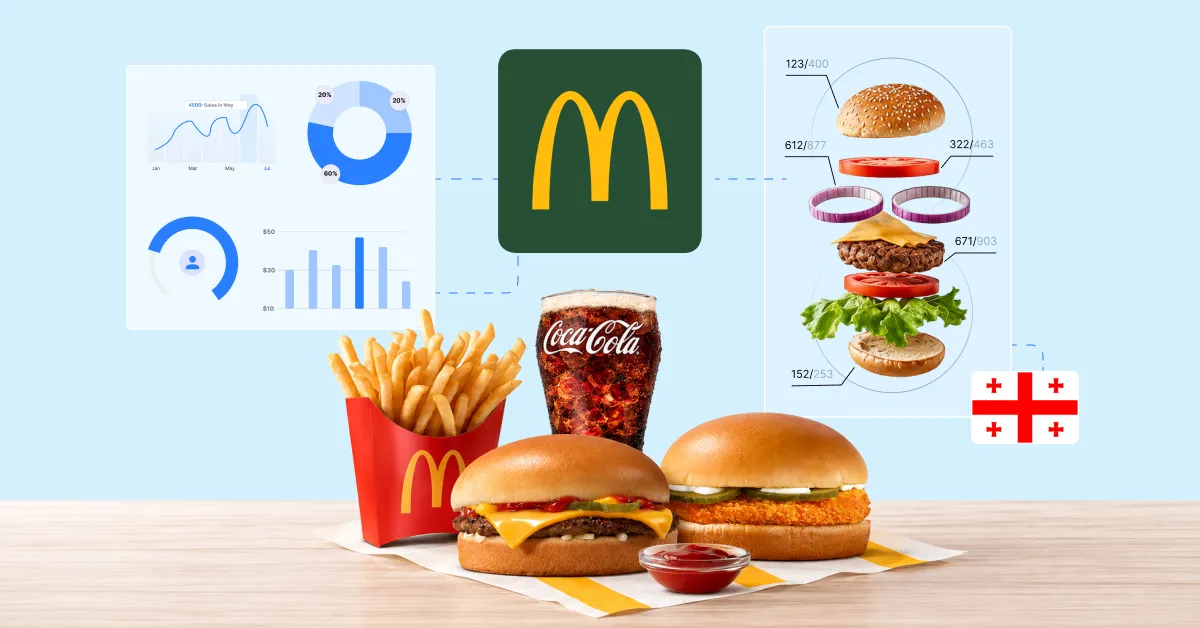
According to the latest McKinsey research, 54% of the best-performing companies see artificial intelligence as their top technology investment priority. The trend points to something clear: AI is gradually moving from the category of innovation to the category of strategic business priorities.
SMART business case studies include many examples of how AI can help teams in their daily work: analyzing documents, preparing for meetings, or processing large volumes of communication. But the potential of artificial intelligence is much broader. In many companies, AI is gradually moving to the level of strategic business decisions, where it helps forecast future development scenarios.
How AI moves from the operational level to the strategic level
According to analysts, artificial intelligence has the potential to create $10 to $15 trillion in global value, and most of this effect comes not from isolated technology use cases but from core business processes such as sales, marketing, and supply chain management. AI goes beyond local tasks and becomes part of systemic management decisions.
Strategic vs. tactical AI: what's the difference?
To better understand the role of AI, it helps to distinguish between two levels of use:
- Tactical AI handles individual operational tasks that a business performs every day, such as automated document processing, quick responses to customers, or preparation of standard reports. This approach delivers a tangible, fast effect: it reduces manual workload, shortens the time needed for routine processes, and improves the overall operational efficiency of teams.
- Strategic AI operates at the level of business decisions and long-term planning. It is used for demand forecasting, resource planning, market signal analysis, and identifying growth opportunities. Here, AI does more than optimize processes: it helps shape the company's direction of development and provides a lasting competitive advantage.
For example, a retail chain implements AI:
- At the tactical level, the system automatically processes invoices and generates sales reports.
- At the strategic level, it analyzes customer behavior, seasonality, and external factors, and forecasts demand for each store.
As a result, tactical AI saves the team's time, while strategic AI determines where to open new locations, what to purchase, and how to scale the business.
What tasks does AI solve at the strategic level?
In practice, strategic use of AI can be broadly divided into three levels:
- Descriptive analytics. AI helps quickly collect and structure large volumes of data: sales, customer behavior, operational metrics. Benefit: instead of analyzing reports manually, the team gets a complete picture of the business within minutes.
- Diagnostic analytics. The system determines why certain changes occurred, for example which factors affected a drop in sales or a rise in demand. Benefit: you can uncover hidden dependencies that are hard to spot manually.
- Predictive analytics. AI models future scenarios, such as demand, workload, and customer behavior. Benefit: a business can "play out" dozens of possible developments in a short time, testing, say, 20 scenarios in an hour instead of going through lengthy analytical cycles. This level creates the most value, because it lets you analyze the past and steer the future.
But in strategic decisions, transparency matters. Once AI begins to influence strategic decisions, the key factor is not only accuracy but also trust in the model. This is known as explainability: the ability to understand why the system makes a particular forecast.
In practice, this means:
- being able to see which factors influenced the result
- understanding which data was used
- tracking how the model's assumptions have changed over time
This approach allows a business to use AI as a decision-making tool in a controlled way.
Which companies benefit most from AI?
The greatest effect from the strategic use of AI comes to companies that have accumulated large volumes of historical data, face dynamically changing demand or workload, and where planning errors are costly and directly affect expenses, revenue, or operational efficiency.
These industries include:
- retail and e-commerce
- FMCG and manufacturing
- logistics and supply chain
- financial services
- HoReCa and chain-based services
In these areas, AI makes it possible to move from reactive management to proactive management.
AI system from SMART business for strategic decisions: the McDonald's Georgia case
A good example of strategic AI use is the implementation of the SMART Demand Forecast system at the McDonald's Georgia restaurant chain.
At the time of the project, the chain had 23 restaurants serving around 35,000 guests every day. Before the new solution, sales forecasts were made at the level of the whole chain and mostly by hand. This approach could not account for the local specifics of individual restaurants, such as seasonality, promotional campaigns, and demand for particular products.
To improve forecasting accuracy, the SMART business team implemented SMART Demand Forecast, a system that uses AI and machine learning algorithms to analyze large volumes of data and automatically account for dozens of factors affecting demand. The model was trained to work with historical sales, seasonality, promotional activity, data anomalies, and other business parameters.
The system builds forecasts for each restaurant and each product, and it also works with shorter forecasting horizons, which allows the business to react to changes in demand faster.
The results confirmed the effectiveness of this approach:
- 83% accuracy in sales forecasting for each restaurant over a 4-week horizon
- 80% forecasting accuracy over a 12-week horizon
- average forecast deviation of about 5%, in line with global demand forecasting benchmarks
Two years after SMART Demand Forecast was implemented, McDonald's Georgia shared updated results of using the system, confirming that the model remains stable and accurate in the long term. Read more here.
Thanks to the solution, McDonald's Georgia was able to plan purchasing more precisely, manage inventory more efficiently, and allocate resources across the chain's restaurants better.
This case shows that artificial intelligence can work not only as a digital assistant for individual tasks but also as an intelligent system for supporting strategic decisions, helping a business forecast demand, optimize costs, and react to market changes faster.
You can read more about this project in the full story of the SMART Demand Forecast implementation for McDonald's Georgia.
Want to implement AI solutions in your processes? The SMART business team will select AI tools that suit your business and help automate key processes such as:
- intelligent information search
- automated document processing
- sales preparation
- company analysis
- demand forecasting
- resource planning, and more
While your competitors are still testing AI solutions, you can already integrate them into your key business processes. Book a consultation, and SMART business will help you create an AI agent or a full-scale system that becomes part of your effective team.